Second opinions
Someone has recommended spine surgery. You want to be sure.
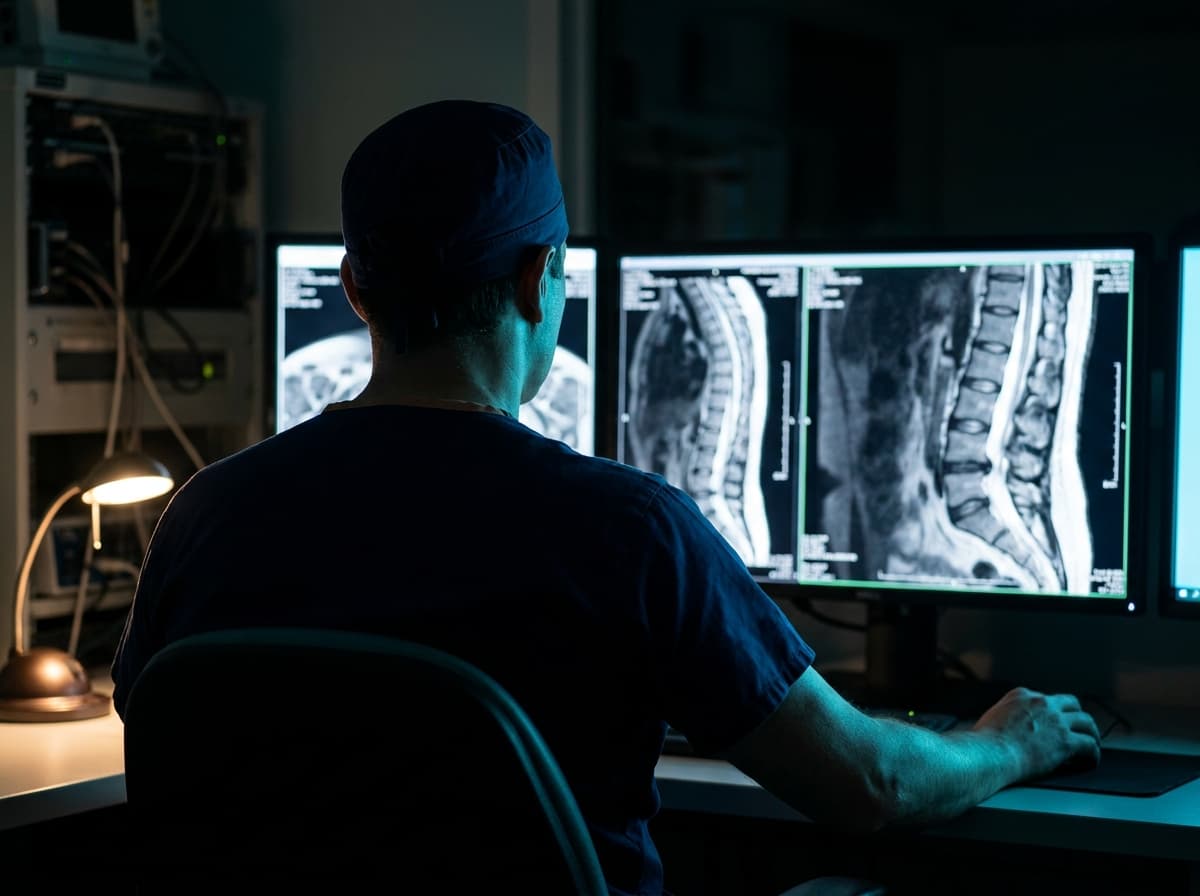
Bring me your imaging. I will tell you what it actually shows, what your options are, and whether I think you need an operation at all.
What I am promising
If you do not need surgery, I will say so.
I start by making sure the diagnosis is right. Then I look for the least invasive thing that will actually fix it. If that turns out to be no operation at all, I will tell you plainly, and I will tell you why.
That is not a rhetorical position. A second opinion can just as easily end in a non-surgical plan, a smaller operation than the one proposed, or a recommendation to wait and re-image. You are entitled to hear the reasoning either way, in language you can repeat to your family that evening.
Will asking for one offend my surgeon?
Almost certainly not. Second opinions are ordinary in spine surgery, and most surgeons expect them before an elective operation. Many of us encourage them outright, because a patient who has heard the same recommendation twice walks into the operating room with far less doubt, and doubt is its own complication.
You are not obliged to tell anyone you are seeking one. Requesting a copy of your own imaging is a routine administrative task that needs no justification. And if the second opinion agrees with the first, that is not a wasted appointment. That is the answer you came for.
Is this you?
Reasons people ask me to look again.
- You have been told you need a fusion and you want to know whether a smaller operation would do.
- Your MRI report used words nobody has explained to you.
- You have had spine surgery before and the pain has come back, or never left.
- You have been told nothing more can be done, and you are not ready to accept that.
- Two clinicians have told you two different things.
- You have a new diagnosis of a spinal tumor, infection, or fracture and you need to understand the timeline.
- The operation you were offered is bigger than you expected and you want a second read on the imaging.
- You feel rushed, and you want one appointment where the whole thing gets explained properly.
What actually happens, start to finish.
- 01
Send the imaging
The study itself, not just the report. A disc, a portal link, or a hospital transfer all work. This is the single most useful thing you can do before we meet.
- 02
I review it myself
I read your MRI or CT personally, alongside your history and what you have already tried. I am looking for whether the finding explains the symptom, which is a different question from whether a finding exists.
- 03
We go through it together
On screen, in the room, at whatever pace it takes. You should leave able to explain your own diagnosis to someone else.
- 04
You get it in writing
My assessment and recommendation, in language you can share with your family and your referring physician, whether or not the recommendation is surgery.
Do not wait for an appointment
Some symptoms need same-day care
Go to an emergency department rather than waiting for a second opinion if you have any of the following: a change in bowel or bladder control, new numbness in the saddle area between the legs, sudden inability to urinate, rapidly worsening weakness in an arm or leg, or a new loss of coordination or balance. These can indicate cord or cauda equina compression, where the timeline is measured in hours.
Second opinions: questions patients ask
Will you tell me if I do not need surgery?
Yes. Not everyone who is offered spine surgery needs it, and not everyone who needs it eventually needs it now. If that is what your imaging and examination show, I will tell you directly, explain what I would do instead, and put it in writing for you and for the physician who referred you.
Will getting a second opinion offend my current surgeon?
It should not, and in my experience it usually does not. Second opinions are a normal part of spine care, and most surgeons expect them before an elective operation. Many of us actively encourage them, because a patient who has heard the same recommendation twice arrives on the day of surgery far more confident. You do not need to tell your surgeon you are getting one, though you are welcome to, and asking for a copy of your imaging is a routine request that does not require an explanation.
What do I need to bring to a second opinion appointment?
The imaging itself matters more than the report. Bring the actual MRI or CT on a disc, or arrange for the images to be sent, rather than only the radiologist's written summary. Also useful: any prior operative reports, the list of treatments you have already tried and how long you tried them, and a short note of what your symptoms stop you doing day to day.
Do you review imaging from outside Michigan?
Yes. I see patients from across Macomb County and Metro Detroit, and imaging performed elsewhere is fine as long as the study itself is available. An in-person examination is still part of a complete opinion, because there are findings that no scan shows.
How quickly can I be seen for a second opinion?
It depends on the week, but second opinions are usually not the appointments that wait longest, because many of them are time-sensitive decisions rather than routine follow-ups. If your symptoms include progressive weakness, changes in balance or coordination, or any change in bowel or bladder control, say so when you call, since those presentations are triaged differently.
Where is your office?
I practice at 50505 Schoenherr Rd #200, Shelby Township, MI 48315, in Macomb County, and see patients from Sterling Heights, Utica, Macomb Township, Clinton Township, Rochester Hills and the surrounding communities.
One appointment, and you will know where you stand.
Shelby Township, Macomb County. Second opinions welcome, with or without a referral.